Grandma Sewing Redwork: A Designer’s Review
There is a distinct comfort in nostalgia, especially when it translates into textile art. As an embroidery designer who has spent years evaluating thousands of machine embroidery design files for both personal passion projects and commercial client work, I look for more than just clean digitizing. I look for soul. When I first loaded the Grandma Sewing Redwork file into my software, I wasn’t just looking at lines on a screen; I was envisioning the finished product. This design captures a quiet, domestic warmth that is increasingly rare in modern, fast-paced digital marketplaces. It feels authentic, grounded, and perfectly suited for makers who want to evoke a sense of heritage and care in their handmade product offerings.
The Visual Personality and First Impressions
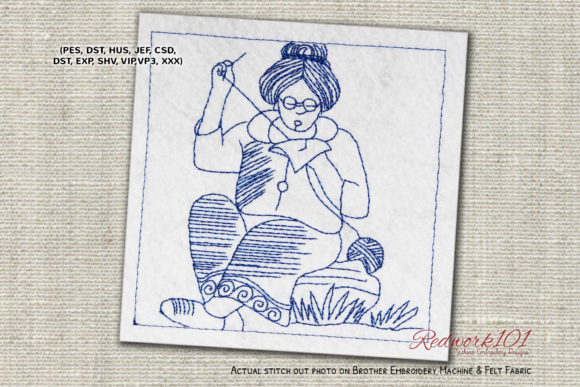
The immediate appeal of Grandma Sewing Redwork lies in its simplicity. Redwork, by definition, relies on single-color stitching, typically using a classic red thread on white or cream fabric. This design adheres to that tradition while offering a narrative element. The imagery suggests a figure engaged in the timeless act of sewing, which creates an instant emotional connection with the viewer. For an Etsy seller or a boutique owner, this is gold. It doesn’t scream for attention with neon colors or complex gradients; instead, it invites the customer to lean in and appreciate the detail.
The layout is balanced, avoiding the clutter that often plagues poorly digitized thematic designs. The lines are clean, suggesting a reliance on precise running stitch work rather than heavy fill stitch areas. This is crucial for redwork aesthetics, where the negative space is just as important as the thread itself. The mood is serene and instructional, making it an ideal candidate for projects that celebrate craftsmanship, such as aprons, sewing bags, or heirloom-quality linens.
Real-World Application: From Screen to Stitch
To truly evaluate a design, you must imagine it in a real-life scenario. I recently considered this design for a custom tote bag design project intended for a local craft fair. The goal was to create a series of reusable bags that celebrated traditional hobbies. Grandma Sewing Redwork fit this brief perfectly. However, the application requires thoughtful planning.
For a tote bag, usually made of canvas or heavy cotton, the design needs to hold its shape without sinking into the weave. Because this is likely a line-art style design, the stitch density appears moderate. This is beneficial for textured fabrics like canvas, as high-density designs can cause puckering or distortion on heavier materials. I envisioned stitching this in a deep, brick-red thread to maintain the traditional redwork look, contrasting beautifully against a natural unbleached cotton background. The result would be a sophisticated, understated accessory that appeals to buyers looking for quality over flashiness.
Beyond tote bags, this design shines in custom apparel. Imagine it placed on the left chest of a linen shirt or the back of a lightweight cardigan. The scale seems appropriate for these placements, provided you verify the dimensions in your embroidery software. For sweatshirt embroidery, the design would need to be scaled up slightly to ensure visibility against the thicker, fleecy fabric, but the simplicity of the lines ensures it won’t become a bulky, stiff patch on the garment.
Navigating Fabric and Hoop Constraints
While Grandma Sewing Redwork is versatile, it is not without its technical considerations. As a reviewer, I must point out where caution is needed. Redwork designs rely heavily on the clarity of individual stitches. If you are working with a stretchy fabric like jersey knit for a t-shirt, proper stabilization is non-negotiable. A cut-away stabilizer is recommended to prevent the design from distorting after washing. Without it, the delicate lines of the sewing figure could warp, losing the crispness that defines the style.
Additionally, consider the hoop size. While the design may fit in a standard 4x4 or 5x7 hoop, always check the actual dimensions in your digitizing software before purchasing or stitching. If the design includes fine details, such as the needle or thread spool mentioned in the concept, ensure your machine’s resolution can handle these small elements. On curved surfaces, like a embroidered patch for a cap or a baseball hat, you must be careful with placement. The design should be centered and stabilized with a strong backing to prevent shifting during the stitching process.
One specific note from the product description mentions that "The Box Stitch shown in picture is optional" and that the outer box color may vary. This is a critical detail for designers. If the box is not part of the core design, you have the flexibility to remove it, allowing the central figure to stand alone. This modularity increases the design’s value, as it can be adapted for different design assets and layouts. However, if you choose to keep the box, ensure the thread color contrasts sufficiently with the background. A dark box on a dark fabric will vanish, ruining the visual impact.
Commercial Viability and Brand Consistency
For small shop product lines, consistency is key. Grandma Sewing Redwork offers a cohesive aesthetic that can be repeated across various items. You could use the same design on kitchen towels, pillow covers, and even baby embroidery items like bibs or burp cloths, creating a curated collection. This approach builds brand recognition. Customers begin to associate that specific red-thread silhouette with your shop’s quality and style.
When preparing this for sale, consider the printable mockup presentation. Since redwork is minimalist, your photos should reflect that elegance. Use natural lighting and simple backgrounds to let the stitching speak for itself. Avoid cluttered props that distract from the embroidery. Highlight the texture of the thread and the precision of the stitches. This attention to detail in marketing materials enhances perceived value and encourages buyer engagement.
It is also vital to address licensing. Before using Grandma Sewing Redwork in commercial embroidery projects, confirm the license terms provided by the creator. Most digital designers allow the sale of finished physical goods, but restrictions may apply to selling the digital embroidery file itself or using the design in mass-produced manufacturing. Always clarify these points to protect your business and respect the original artist’s rights.
Practical Designer Notes for Best Results
To ensure the best outcome with this design, follow these practical steps:
- Test on Scrap Fabric: Always stitch a test sample on the same type of fabric you intend to use for the final product. This helps you adjust tension and stabilize correctly.
- Check Thread Contrast: Redwork traditionally uses red thread, but feel free to experiment. A navy blue or forest green can offer a fresh take while maintaining the single-color aesthetic. Ensure the thread color stands out against the fabric.
- Review Stitch Density: Inspect the design in your software. If certain areas look too dense, consider reducing the density slightly to prevent fabric puckering, especially on lighter materials.
- Verify Hoop Size: Confirm the design fits your available hoops. If resizing, do so proportionally to avoid distorting the aspect ratio of the figure.
- Inspect Small Details: Zoom in on the finest lines, such as the needle or thread strands. Ensure they are not too thin to stitch reliably on your specific machine.
- Mockup in Black and White: Convert your design preview to grayscale to check for value contrast. This helps ensure the design remains visible and impactful even without color cues.
- Use Proper Stabilizer: Match the stabilizer to the fabric. Use tear-away for stable woven fabrics and cut-away for knits or stretchy materials.
In conclusion, Grandma Sewing Redwork is a thoughtful, well-conceived design that bridges the gap between traditional craft and modern commercial application. It requires a discerning eye for fabric choice and stabilization, but the rewards are high. For the craft business owner or the dedicated hobbyist, it offers a chance to create pieces that feel personal, historical, and deeply crafted. It is not just a pattern; it is a statement of values, stitched one line at a time.